Selasa, 06 Okt 2026
  • Pondok Pesantren Putri IMMIM Pangkep, Pesantren yang khusus menerima santri putri ini, kampusnya berada di bilangan jalan poros Kecamatan Minasatene Kabupaten Pangkep

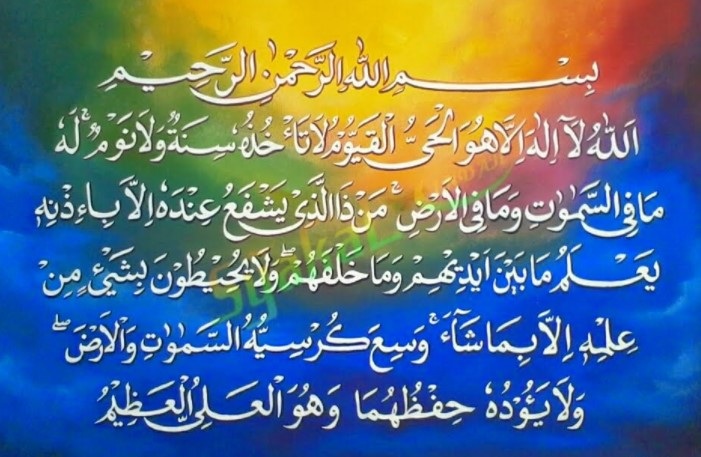
Tanya Jawab “Ayat Kursi” dalam Bahasa Inggris

Tanya Jawab "Ayat Kursi" dalam Bahasa Inggris

By: Muhammad Farid Wajdi *)

Related Post:  Penjelasan tentang Ayat Kursi dalam Bahasa Inggris

BLOGGURU – Here are questions and answers about Ayat Kursi in Al-Qur’anul Karim

1. Question (Q): It is called ayatul-kursi because kursi is mentioned within it ? (True or False?)

Answer (A): True.

Explanation:

  • The verse Ayatul-Kursi (Surah Al-Baqarah 2:255) is named so because it contains the mention of Al-Kursī (the Footstool of Allah): “His Kursī extends over the heavens and the earth…”

  • Hence, the name is directly derived from the term mentioned in the verse.

2. Q: What is the greatest ayah in the Quran?
a. ayatu-dayn (verse of the loan)
b. ayat of the ten rights
c. Ayat al-Kursi

A: Ayat al-Kursi.

Explanation: (1) Ayat al-Kursi (Surah Al-Baqarah 2:255) is described in authentic hadith as the greatest verse in the Qur’an. (2) The Prophet ﷺ told Ubayy ibn Ka‘b that this verse holds this status because it speaks most comprehensively about Allah’s greatness, knowledge, and authority.

Other options:

  • Ayat ad-Dayn (Verse of the Loan) – Longest verse in the Qur’an (2:282) but not the greatest.

  • Ayah of the Ten Rights – Refers to guidance on rights but not ranked as the greatest.

3. Q: Different parts of the Quran are more virtuous than others based on meaning? (True or False?)
A: True.

Explanation:  While the entire Qur’an is sacred and divine, some parts carry greater virtue due to their meanings, themes, or significance in worship.

  • Example: Ayat al-Kursi is the greatest verse.

  • Surah Al-Fatihah is called “the greatest surah” and is required in every prayer.

  • Surah Al-Ikhlas equals one-third of the Qur’an in reward.

Thus, virtue varies based on the depth and scope of meaning.

4. Q: How many of Allah’s names are in this ayah ?
a. Five
b. Six
c. Seven

A:  Five. While the question does not specify the particular ayah (verse), the options provided strongly suggest the inquiry is about Ayat al-Kursi (The Throne Verse), which is the 255th verse of Surah Al-Baqarah in the Qur’an. This verse is renowned for its powerful description of Allah’s attributes and contains several of His sacred names.

Upon careful examination of Ayat al-Kursi, there are five explicit names of Allah mentioned:

  1. Allah (اللَّهُ): The proper name for God.
  2. Al-Hayy (الْحَيُّ): The Ever-Living.
  3. Al-Qayyum (الْقَيُّومُ): The Self-Sustaining, upon Whom all of creation depends.
  4. Al-Aliyy (الْعَلِيُّ): The Most High.
  5. Al-Adheem (الْعَظِيمُ): The Most Great.

Therefore, the correct answer is Five.

It is worth noting that while other attributes of Allah are mentioned in the verse, such as His eternal nature, His knowledge, and His power, these five are the names that are explicitly stated. Some scholarly interpretations may count more by including certain attributes, which can sometimes lead to discussions of a higher number of names. However, the direct and most widely recognized count of the formal names within this celebrated verse is five.

5. Q: Allah’s name Al-Hayy shows completeness in ..?
a. Allah’s essence
b. Allah’s power/dominion

A: Allah’s essence.

Explanation: (1) The name Al-Hayy (The Ever-Living) indicates that Allah possesses perfect, eternal life, unlike any creation. (2) It reflects the completeness of His essence, as His life has no beginning, end, or imperfection.

Note: Al-Qayyum refers to Allah’s power and dominion (maintaining and sustaining everything).

6. Q: Allah’s name Al-Qayyoom shows completeness in .. ?
a. Allah’s essence
b. Allah’s power/dominion

A: Allah’s power/dominion.

Explanation: (1) The name Al-Qayyūm (The Self-Subsisting, Sustainer of all) means Allah maintains and governs all creation. (2) It signifies His perfect control, management, and dominion over the universe.

Comparison: Al-Hayy → Completeness in Allah’s Essence, Al-Qayyum → Completeness in Allah’s Power and Dominion.

7.  Q: if both the names Al-Hayy and Al-Qayoom are mentioned together this shows Allah’s completeness in his essence and power/dominion? (True or False?)

A: True.

Explanation: (1) Al-Hayy indicates Allah’s perfect and eternal life (completeness of His essence). (2) Al-Qayyūm indicates Allah’s perfect ability to sustain, govern, and control all creation (completeness of His power and dominion). (3) When mentioned together, as in Ayat al-Kursi (Surah Al-Baqarah 2:255), they signify the fullness of Allah’s attributes of essence and dominion.

8. Q: these two names Al-Hayy and Al-Qayyoom come together in the Quran in .. ?
a. three places
b. four places
c. two places

A: In three places.

Explanation: The two names Al-Hayy and Al-Qayyūm appear together in three verses of the Qur’an: (1) Surah Al-Baqarah (2:255) – Ayat al-Kursi, (2) Surah Aal-e-Imran (3:2) – “Allah! There is no deity except Him, the Ever-Living, the Sustainer of existence.” (3) Surah Ta-Ha (20:111) – “…And the faces will be humbled before the Ever-Living, the Sustainer.”

Would you like me to list all three verses in full (Arabic + English) for reference?

9. Q: in regards to those attributes that are discarded from Allah we must discard them as Allah did from himself or by way of his messenger whilst affirming the complete opposite as absolute negation doesn’t show perfection or completeness for example we negate from Allah sleep and slumber due his perfect and completeness of life and sustenance of all that exists?  (True or False?)

A: True.

Explanation: In Islamic creed, when we negate an attribute from Allah (e.g., sleep, slumber, injustice), it must be: (1) Based on what Allah or His Messenger affirmed, not personal reasoning. (2) Accompanied by affirmation of the opposite to demonstrate His perfection.

Example: Negating sleep from Allah (as in Ayat al-Kursi) affirms His perfect life and sustenance, Absolute negation alone is incomplete without affirming the attribute of perfection that replaces it.

10. Q: Allah only allows those who is pleased with to intercede for others and Allah is only pleased with …?
a. tawheed
b. followers of the messengers
c. both

A: Both.

Explanation: Intercession (shafā‘ah) is only granted to those whom Allah is pleased with, Allah is pleased with: (1) Tawheed (pure monotheism) – worshipping Him alone without associating partners. (2) Followers of the Messengers – those who accept and follow His guidance.

Thus, both are required for Allah’s pleasure and for intercession to be accepted.

11. Q: Whatever Allah has instructed upon the creation from matters of legislation or divine decree is .. ?
a. Easy
b. a Lot / Hard
A: Easy.

Explanation: (1) In Islam, everything Allah commands—whether through legislation (Shari’ah) or divine decree (Qadr)—is fundamentally within human capacity and never beyond what they can bear. (2) This is supported by Qur’an: “Allah does not burden a soul beyond that it can bear.” (Surah Al-Baqarah 2:286)

12. Q: The meaning of Allah’s name Al-‘Alee .. ?
a. in his essence
b. in his attributes
c. the one who has over powered his creation
d. all the above
A: All the above.

Explanation: Allah’s name Al-‘Alee (ٱلْعَلِيّ) signifies: (1) Highness in His Essence – He is exalted above His creation, (2) Highness in His Attributes – All His attributes are perfect and above any deficiency, (3) Highness in His Dominion – He has complete power and authority over all creation.

13. Q: Whoever reads it at night Allah will place over him a protector no shaytan will get close to him until morning, what is it that should be read?
a. ending of surah baqarah
b. ayatul-kursi

A: Ayat al-Kursi.

Explanation: The Prophet ﷺ said in an authentic hadith (Sahih al-Bukhari) that whoever recites Ayat al-Kursi (Surah Al-Baqarah 2:255) before sleeping, Allah appoints a protector over him, and no shaytan can come near him until morning.

14. One should read ayatul-kursi ?
a. after every obligatory prayer
b. before sleep
c. in the morning and the evening
d. all the above

A: All the above.

Explanation: (1) After every obligatory prayer – Based on hadith in Sunan an-Nasa’i and Ibn Hibban. (2) Before sleep – Mentioned in Sahih al-Bukhari from Abu Hurairah’s narration. (3) In the morning and evening adhkar – As part of daily protection from harm.

15. Q: He knows that which is before them” يعلم ما بين أيديهم consists of ?
a. the present and future
b. the past

A: The present and future.

Explanation: The phrase “يَعْلَمُ مَا بَيْنَ أَيْدِيهِمْ” (He knows what is before them) refers to what lies ahead of them, meaning their present and future affairs.

Thus are the questions and answers from the exegesis of Ayatul Kursi. Hopefully, they will be beneficial. Barakallahu fiikum.

(* Muhammad Farid Wajdi, Teacher “Al-Qur’an-Hadits” at Ponpes Modern Putri IMMIM Minasatene-Pangkep, Sulsel.

KELUAR